What is ECCE?
ECCE stands for Early Childhood Care and Education. It means the care, health, nutrition, play and early learning that children need from birth to about six years old, and the training of the adults who provide it. An ECCE course teaches child development, care routines, play-based teaching and child psychology, and prepares you to work in preschools, nurseries, daycare centres and anganwadis, or to raise your own children with more confidence.
ECCE full form and meaning
The full form of ECCE is Early Childhood Care and Education. 'Care' covers health, nutrition, hygiene, safety and emotional security. 'Education' covers play, language, early literacy and numeracy, and social skills. ECCE treats the two as one, because a young child learns best when they feel safe, healthy and loved.
The term is used by UNESCO, by India's National Education Policy 2020 and by governments worldwide. In the UK the same field is called 'early years', in the USA 'early childhood education', and in Kenya 'ECDE' (Early Childhood Development and Education).
Why the first six years matter
India's National Education Policy 2020 notes that over 85% of a child's cumulative brain development happens before the age of six. The habits, language and confidence children build in these years shape how they learn at school and beyond. That is why governments are expanding preschool and why trained early childhood teachers are in demand.
What an ECCE course covers
A good ECCE course turns care and love for children into skilled practice. London College of Teachers' ECCE courses cover:
- Stages of physical, cognitive, language, social and emotional development from birth to six
- Health, nutrition, hygiene, safety and daily routines
- Play-based and activity-based teaching strategies
- Early literacy, phonics readiness and number sense
- Child psychology and recognising a child's difficulties early
- Observing children, planning activities and working with parents
Who takes an ECCE course
New mothers and parents take ECCE to understand their child's growth. Nannies, caregivers and daycare staff take it to work more professionally. Class 12 students and graduates take it to start a preschool teaching career, and teachers take it to move into early years or to open a playschool. No teaching experience is needed to start.
ECCE course levels
At London College of Teachers ECCE runs from a 120-hour Certificate (Class 10 entry) and 200-hour Diploma (Class 12) to a 240-hour PG Diploma for graduates, a 380-hour Master Level and a 580-hour Integrated Master Level that add specialist certificates.
What ECCE is not
An ECCE certificate or diploma is a professional qualification, not a university degree and not a government teaching licence. Government school posts in most countries need a regulated route, such as India's D.El.Ed or B.Ed with a teacher eligibility test. Private preschools, nurseries, daycares and international schools set their own hiring rules.
How an online ECCE course works, step by step
- You choose a level: Certificate, Diploma, PG Diploma or a Master level.
- You receive a username and password after payment and study online at your own pace.
- Each module ends with an MCQ test or assignment that you pass before moving on.
- At Diploma and PG Diploma level you also write case studies and lesson plans, reviewed by instructors.
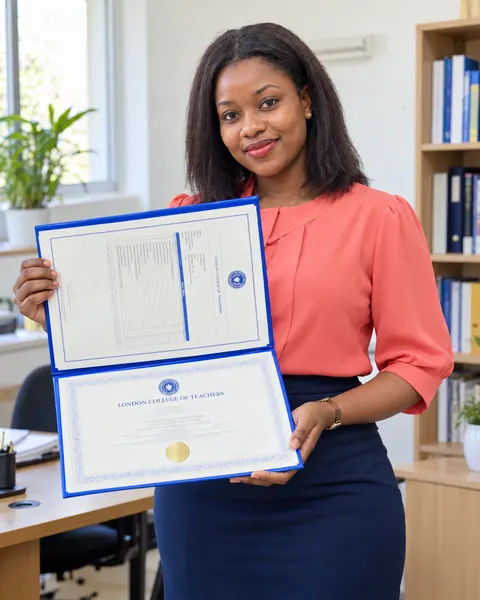
- You receive a verifiable certificate from London College of Teachers when you finish.
What you can do with ECCE
- Teach in preschools, playschools, nurseries and kindergartens
- Work in daycare centres and creches
- Work as a nanny or private caregiver with stronger skills
- Support children in anganwadis and community programmes
- Run activity, phonics or toddler classes
- Open your own playschool or home daycare
- Raise your own children with more understanding and confidence
Five ideas at the heart of ECCE
- Play is learning: children learn through play, not worksheets.
- The whole child: health, feelings, relationships and learning are connected.
- Every child is different: children develop at their own pace within broad milestones.
- Relationships first: secure, responsive adults help children learn.
- Families are partners: parents are a child's first teachers.
ECCE glossary: terms you will see
- ECCE: Early Childhood Care and Education, birth to about six.
- ECE / ECEC: Early Childhood Education / Early Childhood Education and Care, used in many countries.
- ECDE / ECD: Early Childhood Development and Education (Kenya) / Early Childhood Development (South Africa).
- EYFS: England's Early Years Foundation Stage, birth to five.
- Foundational stage: NEP 2020's ages 3 to 8 in India.
- Milestones: skills most children reach within a typical age range.
- Play-based learning: learning through planned and free play.
Myths about early childhood education
- 'Young children just need babysitting.' The first six years are when the brain develops fastest; skilled care makes a lasting difference.
- 'Early learning means early reading and writing drills.' Young children learn best through play, talk and real experiences.
- 'Anyone can teach preschool.' Warmth matters, but training in development, safety and planning makes teachers far more effective.
Frequently asked questions
What is the full form of ECCE?
Early Childhood Care and Education.
Which age group does ECCE cover?
Birth to about six years old. LCT's ECCE courses cover children aged 0 to 6.
How much does an ECCE course cost?
At London College of Teachers the 120-hour ECCE Certificate costs US$170, £140 or ₹11,800 including GST.
What is ECCE in education?
It is the stage of care and education for children from birth to about six, before formal schooling.
Is ECCE a good course?
Yes, for people who enjoy young children. It builds practical skills for preschools, daycares and parenting.
Is ECCE a degree?
No. ECCE courses are certificates and diplomas; degrees in early childhood education are separate.
Can I do ECCE online?
Yes. London College of Teachers' ECCE courses are fully online and self-paced.